

If you've ever spent a full shift on a construction or excavation site, you know that every minute counts. Changing attachments manually-swapping a bucket for a breaker, a grapple for a rake-can eat up hours, delay deadlines, and add to operational costs. That's where quick couplers come in: these hydraulic or mechanical devices let operators switch attachments in seconds, eliminating the need for manual labor and reducing safety risks on the worksite. But for all their benefits, quick couplers aren't flawless. From my years as a quick coupler supplier, I've seen firsthand how even well-built units can run into common problems that slow work, cause downtime, or lead to avoidable maintenance costs. In this post, I'll break down the most frequent issues we encounter, why they happen, and what you can do to avoid them.
First, let's set context: quick couplers are integrated between an excavator's arm and its attachment, locking onto the attachment's pick-up points (called lugs or pins) to keep it secure during operation. There are two core types: mechanical quick couplers, which require manual pin engagement, and hydraulic quick couplers, which use hydraulics to lock and unlock. We also make specialized models like the Tilting Quick Hitch Coupler, Hydraulic Quick Coupler For 6-8ton, Mechanical Quick Coupler, Excavator Hydraulic Quick Coupler, and Hydraulic Tilting Quick Hitch Coupler-each designed for specific machine sizes and job needs. Even with these tailored designs, common problems cut across models and applications.
The first most pervasive issue is improper attachment locking. This isn't just a minor glitch; it's a safety hazard. How does it happen? Often, it's a mismatch between the quick coupler's locking mechanism and the attachment's pin size. For example, if you use a quick coupler designed for 80mm pins on a 75mm attachment pin, the locking wedge won't engage fully, leaving a small gap between the coupler and the attachment. That gap might be hard to spot with a quick visual check, but when you're digging into hard ground or swinging a heavy load, the attachment can shift or even detach. I've had customers come to us with this exact problem: they bought a generic quick coupler that fit their machine's arm, but didn't match their existing attachments. Even our Hydraulic Quick Coupler For 6-8ton is engineered for precise pin tolerances, and using it with ill-fitting attachments can lead to this lock failure. Another cause of bad locking is debris-mud, rock, or concrete build-up in the coupler's locking jaws or around the pins. On a muddy worksite, it's easy for grime to get trapped between the coupler and attachment, so when you activate the lock, it doesn't fully seat. To fix this, operators should always clean the coupler and attachment pins before connecting, and double-check that the lock indicator (a pin that protrudes when locked) is fully engaged, not just halfway.
Next up is hydraulic failure, which is specific to hydraulic quick couplers and tilting models. These rely on hydraulic lines and valves to extend the locking wedge and, in tilting models, to pivot the attachment side-to-side. The most common hydraulic issue is line damage: if the hydraulic hoses run along the excavator's arm without proper protection, they can rub against the arm, rocks, or debris, leading to cuts, leaks, or burst hoses. A leaking hydraulic line means the coupler doesn't get enough pressure to lock securely-or unlock when you need it to. Another hydraulic problem is valve malfunction. Over time, dirt and water can get into the hydraulic system, clogging the control valve or the locking piston. For example, our Hydraulic Tilting Quick Hitch Coupler has a sealed hydraulic system, but if a hose connection isn't tightened properly during installation, contaminants can get in. Operators often notice this when the coupler locks inconsistently-one minute it engages smoothly, the next it sputters. The fix here is regular hydraulic system checks: inspect hoses for wear every 50 hours of operation, replace worn seals, and flush the system if you suspect contamination. For smaller models like the Mechanical Quick Coupler, since they don't rely on hydraulics, line damage is less of a risk, but their manual locking pins can still bend or stick if not maintained.
Third, premature wear and tear-especially on the locking components. Quick couplers are built to handle heavy loads, but they're not indestructible. The locking wedges, pins, and pivot points take constant stress from digging, lifting, and side loading. One big driver of premature wear is overloading: every quick coupler has a rated load capacity, and many operators push it beyond that to save time. For example, a coupler rated for 3-ton attachments shouldn't be used with a 4-ton breaker, even if it fits the machine's arm. Over time, that extra strain causes the locking wedges to wear thin, so they can't grip the attachment pins tightly anymore. Another wear cause is lack of lubrication. Mechanical couplers require greasing the locking pin and pivot points regularly, and hydraulic couplers need lubrication on the moving parts of the locking mechanism to prevent friction. I've seen customers run their mechanical couplers for months without greasing, leading to a pin that seizes up. When that happens, you can't unlock the coupler to swap attachments, which is the exact problem quick couplers are supposed to solve. To avoid this, follow the manufacturer's maintenance schedule: grease mechanical couplers every 10 hours, and inspect hydraulic locking components for wear every 100 hours. Even our most durable Excavator Hydraulic Quick Coupler needs regular wear checks to extend its lifespan.
A less obvious but equally frustrating problem is alignment issues. When you're rushing to switch attachments, it's easy to misalign the coupler with the attachment's pick-up points. If the coupler is angled too far or too close when you lower the excavator arm, the locking jaws can't reach the attachment pins, or they hit the pin at an angle instead of straight on. This can bend the attachment's lugs or the coupler's locking jaws, leading to permanent damage. For tilting models, alignment is even more critical because the coupler has to line up with both the arm's pivot points and the attachment's lugs. Our Tilting Quick Hitch Coupler is designed with built-in alignment guides, but operators often ignore them when they're in a hurry, leading to misalignment. The fix here is simple: take an extra 10 seconds to align the coupler with the attachment before lowering. Many customers find that using a spotter or adding visual guides (like paint marks on the coupler and attachment) makes alignment faster and reduces damage. Misalignment can also happen over time if the coupler is installed incorrectly on the excavator's arm. If the mounting bolts are loose or torqued to the wrong specification, the coupler can shift, leading to consistent alignment issues. Always follow the installation instructions for your specific coupler-for example, the Hydraulic Quick Coupler For 6-8ton has specific torque requirements for mounting bolts to prevent shifting.
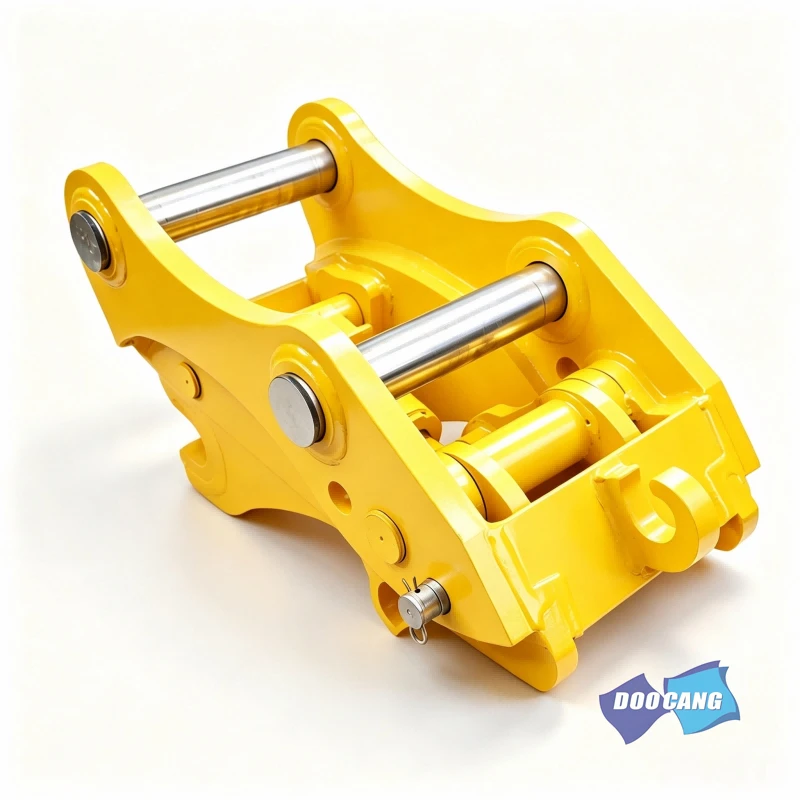
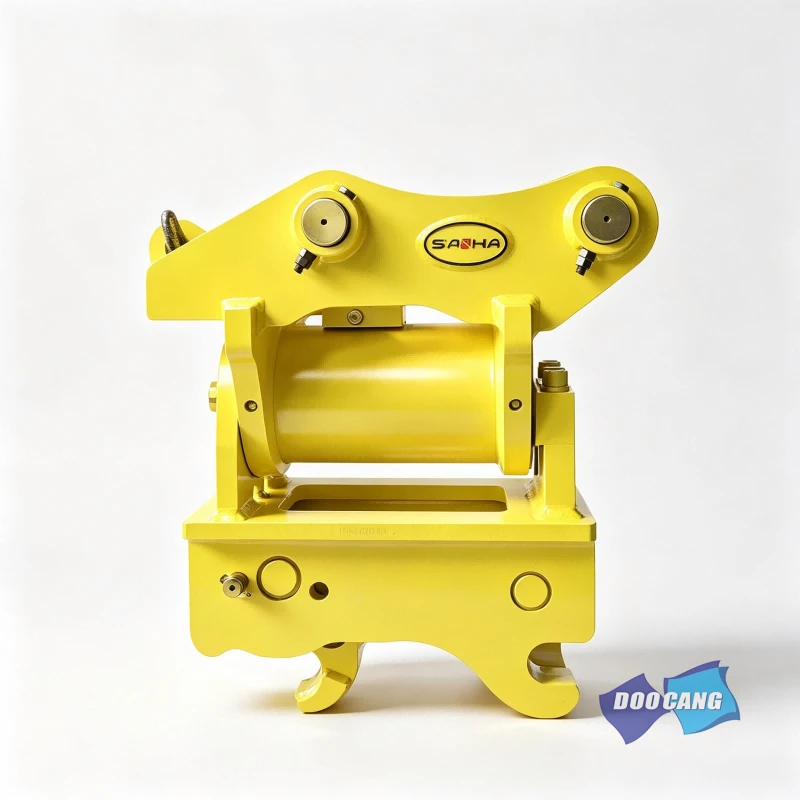
Another common issue is poor visibility during attachment exchange. When you're switching attachments, you need a clear line of sight to make sure the coupler locks correctly. But on many worksites, visibility is limited: dust, mud, or obstacles around the excavator can block your view of the lock indicator. This means operators might think the coupler is locked when it's only partially engaged, which as we mentioned earlier, is a major safety risk. Even with cameras installed on excavators, the view can be blurry or angleed, making it hard to confirm the lock. One solution here is to add a lock indicator with a bright, high-visibility color-many of our couplers have a red pin that protrudes when the lock is engaged, so even from a distance, you can tell if it's secure. Another fix is to train operators to do a "pull test" after locking: once the coupler is engaged, move the excavator arm slightly forward and tug on the attachment to confirm it doesn't shift. This is a simple step that takes 5 seconds but prevents a lot of accidents.
Finally, compatibility with non-standard attachments. Many worksites use custom or older attachments that don't match standard quick coupler designs. For example, a 10-year-old grapple might have larger lugs than a modern bucket, so it won't fit properly on a standard coupler. Some operators try to force the fit, modifying the attachment or the coupler, which can weaken both components. This is where choosing the right coupler for your attachments matters. If you have a mix of standard and non-standard attachments, look for a coupler with adjustable locking jaws-we make models that can accommodate different pin sizes, and for customers with 6-8ton excavators, the Hydraulic Quick Coupler For 6-8ton is available with adjustable jaws to fit most common attachment sizes. Avoid generic couplers that claim to fit all machines-they often skimp on precision, leading to compatibility problems.
As a supplier, our goal isn't just to sell quick couplers, but to help customers avoid these common issues. That's why we provide detailed maintenance guides for every model, from the basic Mechanical Quick Coupler to the more complex Hydraulic Tilting Quick Hitch Coupler. We also offer sizing consultations to make sure customers choose a coupler that matches their machine and attachments, not just the cheapest option on the market.
If you're experiencing any of these quick coupler problems, or you're in the market for a new coupler that's built to handle your worksite's demands, feel free to reach out to our team for guidance and customized solutions.
References:
- International Organization for Standardization. (2018). Earth-moving machinery - Couplers for work equipment - Safety requirements and tests. ISO 13031:2018.
- Construction Safety Association of Ontario. (2021). Quick coupler safety best practices for excavation worksites. CSAO Technical Bulletin.
- European Equipment Manufacturers Association. (2022). Maintenance guidelines for hydraulic and mechanical quick couplers. EEMA Equipment Standards Report.
- United States Occupational Safety and Health Administration. (2020). Fall protection and equipment attachment safety for construction worksites. OSHA 3223-12R.


