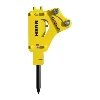
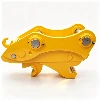
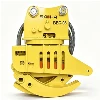
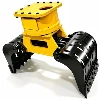
With the continuous development of the construction machinery industry, excavators have become essential equipment in modern engineering projects, and their ability to perform various tasks has attracted increasing attention. As a commonly used attachment, the excavator grapple is widely applied in construction, material handling, waste removal, mining operations, and river management due to its flexible design and powerful working capability. Excavator grapples not only expand equipment versatility but also improve operational efficiency and reduce labor costs.
One of the primary functions of an excavator grapple is material grabbing. Unlike traditional buckets, grapples use an opening and closing mechanism to clamp and move materials with different shapes and characteristics. They can handle bulky, loose, and irregular materials effectively. For example, during building demolition, grapples can quickly collect concrete blocks, steel bars, and construction waste. In mining operations, they can be used to move rocks and ore materials, improving productivity at the work site.

Precise material handling is another important function of excavator grapples. With excellent control flexibility, operators can adjust gripping force and working angles according to specific requirements, allowing accurate handling of target materials. This feature makes grapples especially suitable for projects requiring detailed operations or limited working space, such as landscaping, waste sorting, and urban renovation.
Excavator grapples also provide effective cleaning and sorting capabilities. At construction sites, they can remove construction debris, tree roots, soil, and other unwanted materials, improving site preparation efficiency. In river management and environmental protection projects, grapples can assist in removing underwater waste, sediment, and floating debris, providing valuable support for environmental maintenance.
Based on different application requirements, excavator grapples are available in various types with specific functions. Hydraulic grapples use hydraulic power to provide strong gripping force and stable operation. Mechanical grapples feature simple structures and easy maintenance, making them suitable for general material handling tasks. Clamshell grapples are designed for loading and unloading bulk materials such as sand, gravel, and coal. Different grapple designs meet the needs of various industries and working conditions.
In addition to improving work efficiency, excavator grapples also enhance construction safety. Mechanical handling reduces the need for workers to directly contact hazardous materials, lowering operational risks. At the same time, modern grapple products continue to improve structural designs, wear resistance, and service life, allowing equipment to perform reliably in more challenging environments.
With ongoing innovations in construction machinery technology, excavator grapples are developing toward higher performance, intelligent operation, and multifunctional applications. In the future, through advanced materials, automated control technologies, and optimized structural designs, excavator grapples will play a greater role in various industries and provide more efficient, convenient, and reliable solutions for engineering operations.