1. Main Housing Design: Box, Top and Side Type Breakers Have Different Price Tags
The first big price divider is the housing structure.
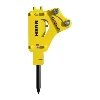
Side type hydraulic breaker: Usually the budget option. Simple frame, easy maintenance. Popular for farm work, road repair and light rock breaking. Lower production cost.
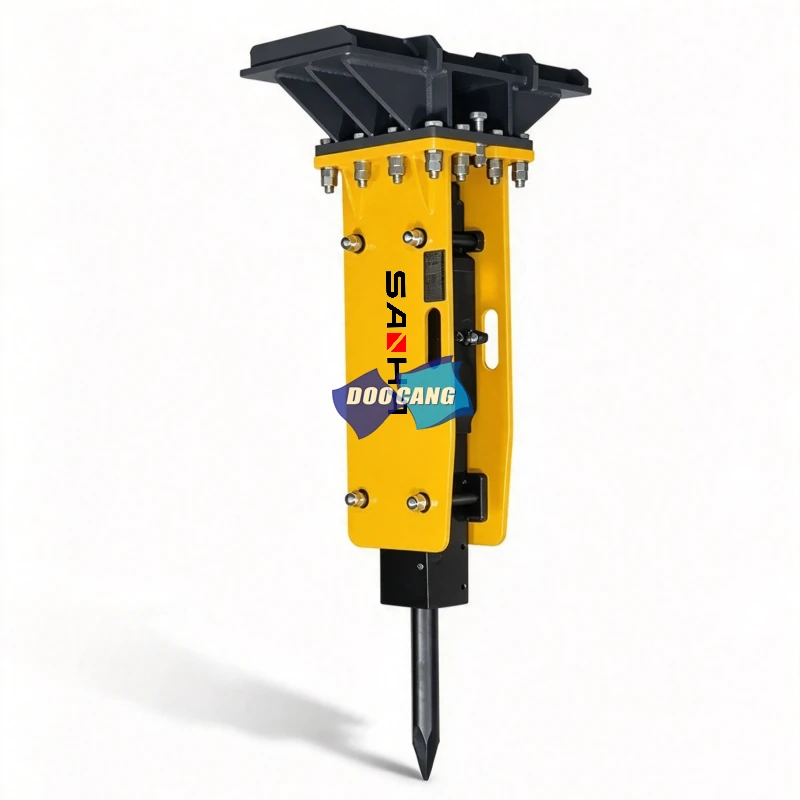
Top type hydraulic breaker: Balanced performance and price. Stable structure, widely used in quarries and general demolition. This is the most common model for 12–25 ton excavators.
Box type hydraulic breaker (silent type): Highest price among the three. Extra noise reduction shell, better shock absorption. It is the preferred choice for urban demolition projects where local rules have strict noise limits.
Case story: An Australian demolition firm once bought two side-type breakers for city jobs. They soon got noise complaints and fines. Finally they replaced them with box type breakers. The upfront cost was higher, but they avoided fines and project delays.
2. Excavator Matching Tonnage Decides the Base Cost
Breakers are built to match specific excavator weight classes.
Mini hydraulic breaker (for 1–4 ton excavators): Lowest price, for landscaping, small trench work
Medium hydraulic breaker (for 5–20 ton excavators): Best-selling range, balanced cost and power
Large heavy-duty hydraulic breaker (for 25–45 ton excavators): Highest base price, thick main body, big piston, for hard granite quarrying
A common mistake: Some buyers try to fit a large breaker on a small excavator just to save money. It will damage the excavator hydraulic pump in a short time, and the repair bill can be far higher than the breaker itself.

3. Material & Heat Treatment Quality Makes a Hidden Price Gap
Two breakers that look identical in photos can have a huge quality difference. High-quality breakers use forged main body and piston, with strict heat treatment. The chisel (moil point) is made of wear-resistant alloy steel. Cheap versions use cast parts with simple heat treatment. They crack easily, and the chisel wears out very fast.
I talked with a quarry operator in Kazakhstan. He bought a cheap breaker two years ago. Within 3 months, he replaced 3 chisels and repaired the cylinder twice. He spent more on spare parts than the price difference between the cheap unit and a reliable brand.
4. Spare Parts, Warranty & After-sales Service Affect the Total Cost of Ownership
Price is not only the invoice value. You need to check:
How long is the warranty period?
Are common spare parts (chisel, seal kit, diaphragm, bushing) easy to source?
Does the supplier provide technical support and troubleshooting guidance?
Some suppliers sell breakers at a very low price, but they charge high prices for spare parts and offer no technical support after delivery. For users running the hammer 8 hours per day, this becomes a costly trap.
5. Extra Options That Push the Price Up
These optional features add value, and also add cost:
Auto-greasing system: Extend service life, save manual lubrication time
Pressure accumulator: Improve impact power and protect excavator
Custom paint and logo for rental fleets
Full set of spare parts package shipped together with the breaker
How to Compare Quotes Correctly, Not Just Compare the Number
When you get multiple quotations, compare these items side by side:
Matching excavator tonnage
Housing type: side / top / box silent type
Standard included accessories
Warranty coverage
Origin of core components
Lead time and shipping terms (FOB, CIF, DDP)
Do not pick the lowest quote blindly. Calculate the total running cost for 1 or 2 years, not just the purchase price.
Conclusion
The price of a hydraulic breaker depends on housing style, size, material quality, spare parts availability and after-sales support. The cheapest option is rarely the most economical choice for heavy daily use. Before asking for a quotation, prepare your excavator model, main working conditions (quarry, urban demolition, road work), and local noise requirements. This helps your supplier offer an accurate, suitable quote and avoid mismatched equipment.
FAQ
Q: Is a box type hydraulic breaker always worth the extra money?
A: If you work in cities or residential areas with noise limits, yes. For remote quarries, top type breakers are usually more cost-effective.
Q: How long is the normal service life of a hydraulic breaker?
A: With proper maintenance and regular greasing, a good-quality breaker can run for 2–5 years, depending on working intensity and rock hardness.
Q: Can I use one hydraulic breaker for multiple excavators of different sizes?
A: Not recommended. Each breaker is designed for a fixed hydraulic flow and pressure range. Mismatched flow causes early failure.