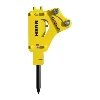
With the expanding applications of construction machinery, hydraulic breakers have become essential equipment for excavator operations. They play an important role in building demolition, road maintenance, mining, and foundation construction projects. As key parts that ensure reliable equipment operation, the quality of hydraulic breaker components directly affects equipment performance, construction efficiency, and service life. Therefore, selecting suitable components scientifically has become an important step in improving overall equipment performance.
When choosing hydraulic breaker components, the first consideration should be compatibility with the equipment model. Different breaker brands and specifications may have differences in structural design, installation dimensions, and operating parameters. If unsuitable components are selected, installation difficulties, unstable operation, or equipment damage may occur. Therefore, users should fully understand the breaker model, working environment, and technical requirements before purchasing components to ensure proper compatibility.
Material quality is another important factor affecting hydraulic breaker component performance. Since breakers operate under high-frequency impact and heavy loads for extended periods, key parts such as chisels, pistons, and cylinders require excellent strength and wear resistance. High-quality components are usually manufactured from strong alloy materials and enhanced through processes such as heat treatment and surface strengthening to improve impact resistance and service life. During selection, users should pay close attention to material specifications and manufacturing processes.
Machining accuracy is also an essential factor when selecting components. Internal parts of hydraulic breakers require precise coordination to operate efficiently. Large manufacturing errors may cause abnormal wear, energy loss, or equipment failures during operation. High-precision components improve power transmission efficiency and allow the equipment to operate more smoothly.
Wear resistance is another important standard for evaluating hydraulic breaker components. For example, chisels must withstand continuous impact from hard materials such as rock and concrete, requiring excellent hardness and wear resistance. Sealing components need strong temperature resistance, aging resistance, and sealing performance to maintain stable hydraulic system operation.
When selecting components, users should also consider the manufacturer's technical capabilities and after-sales service quality. Reliable manufacturers usually have comprehensive quality inspection systems and provide products that meet industry standards. Effective after-sales support can help users solve problems related to installation, operation, and maintenance, improving overall equipment experience.
With continuous advancements in construction machinery technology, hydraulic breaker component requirements are becoming increasingly demanding. In the future, components featuring high strength, excellent reliability, and long service life will become an important trend in the industry. Through scientific selection and proper use of components, hydraulic breakers can achieve higher efficiency and provide more stable and reliable support for engineering operations.