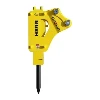
With the continuous development of the construction machinery industry, hydraulic breakers have become essential equipment for excavator operations and are widely used in building demolition, road renovation, mining, foundation engineering, and rock-breaking projects. As important parts of hydraulic breakers, components not only perform key tasks such as power transmission and impact generation but also directly affect equipment stability, safety, and service life. Understanding the main functions of hydraulic breaker components helps improve operating efficiency and reduce maintenance costs.
One of the primary functions of hydraulic breaker components is power transmission. Hydraulic breakers receive energy from the excavator's hydraulic system, and internal components convert hydraulic energy into mechanical impact force. The piston is a key power conversion component that generates impact energy through high-speed reciprocating movement and transfers the force to the chisel, allowing the equipment to break hard materials such as concrete and rock.
The chisel is one of the most important working components of a hydraulic breaker. Its main function is to apply impact force directly to the target material and achieve efficient crushing performance. Since the chisel is exposed to continuous impact and friction, it must have excellent wear resistance and impact strength. High-quality chisels improve breaking efficiency, reduce replacement frequency, and ensure stable long-term operation.
Structural components such as cylinders and inner and outer bushings mainly provide support and protection. The cylinder creates a stable operating space for piston movement while withstanding pressure and vibration generated during operation. Inner and outer bushings reduce friction between moving parts, protect critical components, and improve overall equipment durability. Through optimized designs and high-strength materials, these structural parts help extend hydraulic breaker service life.
Sealing components perform important protective functions during hydraulic breaker operation. Since the internal hydraulic system operates under high pressure for long periods, seals must prevent hydraulic oil leakage and block external contaminants such as dust and moisture from entering the equipment. Effective sealing performance helps maintain stable system pressure and improves operational efficiency.
Control valves and nitrogen chamber assemblies are also important functional components of hydraulic breakers. The control valve regulates hydraulic oil flow direction, allowing the equipment to perform continuous impact operations. The nitrogen chamber stores and releases gas pressure to enhance impact energy, improve breaking performance, and reduce hydraulic system load for smoother operation.
In addition, connection components such as bolts and pins ensure secure connections between different parts and improve overall structural stability. High-quality connection components reduce loosening problems during operation and enhance equipment safety.
With continuous advancements in manufacturing technologies, hydraulic breaker components are developing toward higher performance, greater reliability, and longer service life. Through the application of advanced materials, precision manufacturing, and intelligent inspection technologies, modern components can better meet the requirements of complex working environments. In the future, high-quality hydraulic breaker components will continue to improve construction machinery performance and provide more efficient and reliable support for industries such as construction and mining.