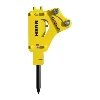
With the continuous development of the construction machinery industry toward higher performance and efficiency, hydraulic breakers have become important excavator attachments widely used in building demolition, mining, road construction, and foundation engineering. As core parts of hydraulic breaker systems, component specifications directly affect breaking efficiency, operational stability, and service life. Understanding key technical parameters allows users to select and maintain components more effectively and improve overall equipment performance.
The technical specifications of hydraulic breaker components mainly include material properties, dimensional standards, working pressure, wear resistance, machining accuracy, and compatibility requirements. Among these factors, material performance is one of the most important indicators affecting component quality. Since hydraulic breakers operate under high-frequency impact and continuous loads, key parts such as chisels, pistons, and cylinders are usually manufactured from high-strength alloy steel and strengthened through heat treatment processes to improve hardness and fatigue resistance.
Dimensional specifications are also essential technical indicators for hydraulic breaker components. Different breaker models require different component sizes, including length, diameter, installation dimensions, and structural parameters. Accurate size matching ensures proper connection between components and equipment, preventing unstable operation or damage caused by installation errors.
Working pressure specifications determine whether components can withstand the operating conditions of hydraulic systems. Since hydraulic breakers generate impact force through hydraulic power, components must tolerate pressure fluctuations within a certain range. High-quality components provide strong pressure resistance, allowing equipment to maintain stable performance during heavy-duty operations.
Wear resistance is another important standard for evaluating hydraulic breaker components. For example, chisels are constantly exposed to hard materials such as rock and concrete, requiring excellent surface hardness and resistance to wear. Moving parts such as pistons and bushings must minimize friction losses and extend service life. The use of wear-resistant materials and advanced surface treatment technologies can significantly improve component durability.
Machining accuracy also plays an important role in overall hydraulic breaker performance. High-precision manufacturing ensures closer cooperation between components, reduces operating gaps, and improves power transmission efficiency. Precision processing also helps reduce vibration and noise, allowing smoother equipment operation.
In addition, compatibility is an important parameter when selecting hydraulic breaker components. Different excavator brands, models, and breaker types have specific requirements for component dimensions and performance. Selecting properly matched components improves equipment compatibility and reduces maintenance costs.
With continuous advancements in manufacturing technologies, hydraulic breaker component specifications are developing toward greater precision, efficiency, and intelligent performance. Through the application of new materials, digital design methods, and strict quality inspection systems, modern components continue to achieve higher reliability and improved performance. In the future, advanced technical standards will further promote the development of hydraulic breaker components and provide more stable and efficient solutions for the construction machinery industry.