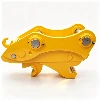
With the continuous development of the construction machinery industry, excavator attachments are being used in an increasingly wide range of applications. As an important device connecting excavators with various attachments, quick couplers have become common equipment accessories due to their convenient installation, fast attachment replacement, and flexible operation. Although quick couplers significantly improve work efficiency, improper operation and maintenance may affect equipment safety and service life. Therefore, understanding the proper precautions for using quick couplers is essential for safe construction and reliable equipment performance.
Before using a quick coupler, the first step is to confirm that the equipment model matches the specifications of the coupler. Different excavator models and attachments have different requirements for dimensions, load capacity, and structural design. If the quick coupler is not suitable for the equipment, it may result in improper installation, loose connections, or even safety risks. Therefore, users should select the correct model according to excavator capacity, attachment weight, and actual working conditions.

During installation, operators should strictly follow standard procedures and conduct necessary inspections. After connecting the quick coupler to the excavator, the condition of pins, locking mechanisms, and hydraulic systems should be carefully checked. For hydraulic quick couplers, hydraulic lines must be securely connected to prevent oil leakage from affecting equipment operation. The connection area should also be kept clean to prevent dust, sand, and debris from entering the locking mechanism and causing wear or malfunction.
When replacing attachments with a quick coupler, operators should follow the correct operating process. The excavator should be parked on stable ground, and the attachment should be positioned safely before replacement. After connection, a trial operation should be performed to confirm that the attachment is firmly locked and there is no abnormal movement between the attachment and coupler. Performing heavy-duty operations without proper inspection may increase the risk of component damage.
During daily operation, regular inspections of quick coupler wear conditions are necessary. Because the equipment is continuously exposed to impact, vibration, and heavy loads, components such as pins, hooks, and bushings may experience wear over time. If excessive clearance, deformation, or reduced locking performance is detected, repairs or replacements should be carried out promptly to maintain operational safety.
Proper lubrication is also an important method for extending quick coupler service life. Moving connection points should be regularly lubricated to reduce friction and maintain smooth operation. In addition, quick couplers should be protected from prolonged exposure to moisture or corrosive environments to prevent rust and structural weakening.
Operator practices are equally important for safe quick coupler use. During construction, users should avoid operations beyond the designed capacity of the coupler, such as excessive side impacts or lifting overweight materials, as these actions may damage the structure.
With the continuous improvement of intelligent construction machinery technologies, quick coupler design and manufacturing processes are also advancing. In the future, high reliability, intelligent locking systems, and easier maintenance will become important development trends. Through correct operation and scientific maintenance, quick couplers can maximize their advantages, improve excavator productivity, and provide safer and more efficient support for engineering projects.